Introduction
It started as one of those mornings where everything felt slightly off-kilter. I had woken up earlier than usual, the house was unusually quiet, and I found myself scrolling through my phone while still in bed. Like many people, I was checking two things simultaneously: the latest updates about Devin Booker’s performance and whether any schools were closed today due to weather conditions. This dual focus on sports news and practical daily information has become something of a morning ritual for me, a way to ground myself in both the world of entertainment and the realities of the day ahead.
There’s something comforting about these morning routines, these small rituals that help us transition from sleep to wakefulness. For me, it’s not just about gathering information but about establishing a sense of connection to both the larger world and my immediate environment. The combination of checking on an NBA star’s latest achievements while also verifying practical local information creates a strange but satisfying balance between aspiration and reality, between what’s happening in professional sports and what’s happening in my own neighborhood.
This particular morning felt different though. The light coming through my window had that soft, diffuse quality that often precedes a day of unexpected changes. I could feel the temperature shifting even from inside, that subtle drop that makes you reconsider your clothing choices for the day. It was in this liminal space between checking my phone and preparing for whatever the day might bring that I began thinking about comfort in a more intentional way.
Real-life Context
The reason I was particularly focused on school closures that morning was because my usual work-from-home routine would be different if local schools were unexpectedly closed. I help coordinate a community youth program, and our schedule often depends on whether children have school or not. That morning, as I confirmed that yes, several schools in the area were closed due to teacher development days, I realized I had an unexpected free morning before my afternoon commitments began.
This sudden gift of time felt both liberating and slightly disorienting. I had planned to spend the morning working at my desk, but now I found myself with several unplanned hours. The house was quiet, the neighborhood unusually still without the morning school rush. I decided to embrace this unexpected pause in my routine, to treat it as a moment of quiet reflection rather than scrambling to fill it with productivity.
As I moved from my bedroom to the living room, I noticed the temperature difference more acutely. The central heating hadn’t quite caught up with the morning chill, and I found myself wanting something more substantial than my usual morning attire. It was in this moment of physical awareness that I started thinking about clothing not just as practical covering but as an element that could enhance or detract from these unexpected moments of quiet.
There’s something about unexpected free time that makes you more aware of your physical comfort. When you’re rushing from one task to another, you can ignore minor discomforts, but when you have space to just be, every sensation becomes more noticeable. The weight of fabric, the way it moves with your body, the temperature regulation – these become central to how you experience these stolen moments of calm.
Observation
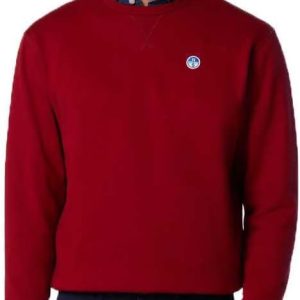
What I noticed during that unexpectedly free morning was how much my choice of clothing influenced my ability to truly relax into the unexpected time. I had chosen a simple red sweatshirt that morning, one I’d had for a while but hadn’t really paid much attention to beyond its basic function of keeping me warm. As I settled into my living room chair with a book I’d been meaning to read, I became aware of how the sweatshirt felt against my skin.
The fabric had a substantial quality that I hadn’t fully appreciated before. It wasn’t heavy in an oppressive way but provided a consistent warmth that felt like a gentle embrace. The sleeves moved easily as I turned pages, never pulling or restricting my movement. The neckline sat comfortably without rubbing or chafing, something I only noticed because I was sitting still for an extended period rather than moving through my usual busy morning.
I found myself paying attention to details I normally wouldn’t notice. The way the cuffs hugged my wrists just enough to keep warmth in but not so tightly as to leave marks. How the body of the sweatshirt had enough room to move comfortably but didn’t billow or feel baggy. The subtle texture of the fabric that made it pleasant to touch when I rested my arms on the chair. These were all small things, but together they created an overall sensation of being comfortably contained yet completely free to move.
As the morning progressed, I moved from reading to making tea, then to simply watching the neighborhood through my window. Through all these small activities, the sweatshirt remained consistently comfortable. It didn’t bunch up awkwardly when I sat down, didn’t feel too warm when I moved around making tea, and didn’t develop that stiff feeling some fabrics get after being worn for a few hours. It just existed as a comfortable second skin, allowing me to focus on enjoying my unexpected free time rather than on what I was wearing.
Reflection
I didn’t realize at the time that this would be so important, but that morning became a turning point in how I think about clothing and comfort. It wasn’t just about being physically comfortable; it was about how the right clothing can create mental space for reflection and enjoyment. The sweatshirt I wore that day happened to be the NORTH SAILS Logo Sweatshirt in red, though at the time I wasn’t thinking about brands or specifications – I was simply experiencing how it felt to be comfortably present in an unexpected moment of peace.
What struck me later, as I reflected on that morning, was how we often underestimate the role clothing plays in our daily experiences. We tend to think of clothes in terms of fashion or basic necessity, but rarely consider them as active participants in how we experience our time. That sweatshirt, with its careful construction and quality materials, wasn’t just keeping me warm – it was facilitating a state of mind, allowing me to be fully present in those unplanned hours rather than distracted by physical discomfort.
I thought about how the sweatshirt’s design elements – the comfortable fit, the soft yet durable fabric, the thoughtful construction – all worked together to create an experience rather than just serve a function. The logo, which I had initially considered merely decorative, became something I noticed differently throughout the day. It wasn’t flashy or prominent, but rather integrated into the garment’s overall aesthetic in a way that felt authentic rather than branded.
This experience made me reconsider what I look for in clothing beyond obvious factors like price or style. I started paying attention to how garments feel during different activities, how they move with my body, how they maintain comfort over hours of wear. That morning showed me that true comfort in clothing isn’t just about the absence of discomfort but about the presence of qualities that support whatever you’re doing, whether that’s reading quietly, moving around your home, or simply being still.
The realization that something as simple as a sweatshirt could enhance my experience of unexpected free time felt almost revolutionary in its simplicity. We spend so much time optimizing our environments for productivity or entertainment, but rarely consider how our clothing contributes to our overall quality of experience. That morning with the red sweatshirt taught me that comfort wear, when well-designed, does more than cover your body – it can actually improve how you experience time itself.
Conclusion
That unexpected morning, born from checking Devin Booker updates and school closures, ended up teaching me something valuable about the relationship between clothing and daily experience. It wasn’t about the sweatshirt as a product to be evaluated, but about how the right garment can transform ordinary moments into something more meaningful. The comfort I experienced wasn’t just physical but extended to my metal state, allowing me to fully embrace the gift of unexpected time rather than worrying about how to fill it productively.
I’ve come to see that the best clothing items are those that you stop noticing because they work so well with your body and activities. They become extensions of yourself rather than separate entities you have to manage or adjust. The red sweatshirt from that morning has become a regular part of my wardrobe not because of any brand loyalty or specific features, but because it reliably provides that same seamless comfort across different situations and moods.
What stays with me from that experience is the understanding that comfort in clothing isn’t a luxury or an afterthought – it’s fundamental to how we move through our days. Whether we’re dealing with unexpected schedule changes, enjoying quiet moments at home, or navigating our daily routines, the clothes we wear either support or detract from our experience. Finding garments that consistently support rather than distract has become something I value more deeply since that morning of unexpected freedom.
The intersection of practical concerns like school closures and personal interests like following athletes like Devin Booker creates the texture of our daily lives. And in those spaces between obligation and interest, between planned activities and unexpected moments, our clothing choices can make all the difference in how we experience that time. That red sweatshirt didn’t change my life in any dramatic way, but it did change how I think about the relationship between what I wear and how I experience the small, unexpected gifts of time that life occasionally offers.